Whole-Home Mold Remediation in Hudson, FL
The water came over the seawall and through the sliders during Helene and stood in the house for most of a night. Or you came back in November to a house that sat closed since April with the thermostat at 85, and there is fuzz on the couch, the closet walls, and the underside of every kitchen cabinet. One patch is a repair. This is a project. This site connects you by phone with an independent local provider who does whole-home mold remediation in Hudson and across Pasco County.
What the crew does first
A whole-house job is mapped before anything is opened. The crew walks every room with a moisture meter and marks each wall, cabinet, and ceiling that reads wet, then draws the water line on paper. After surge water on a slab house that usually means the bottom two to four feet of every exterior wall on the canal side, plus the interior walls that share a wet plate.
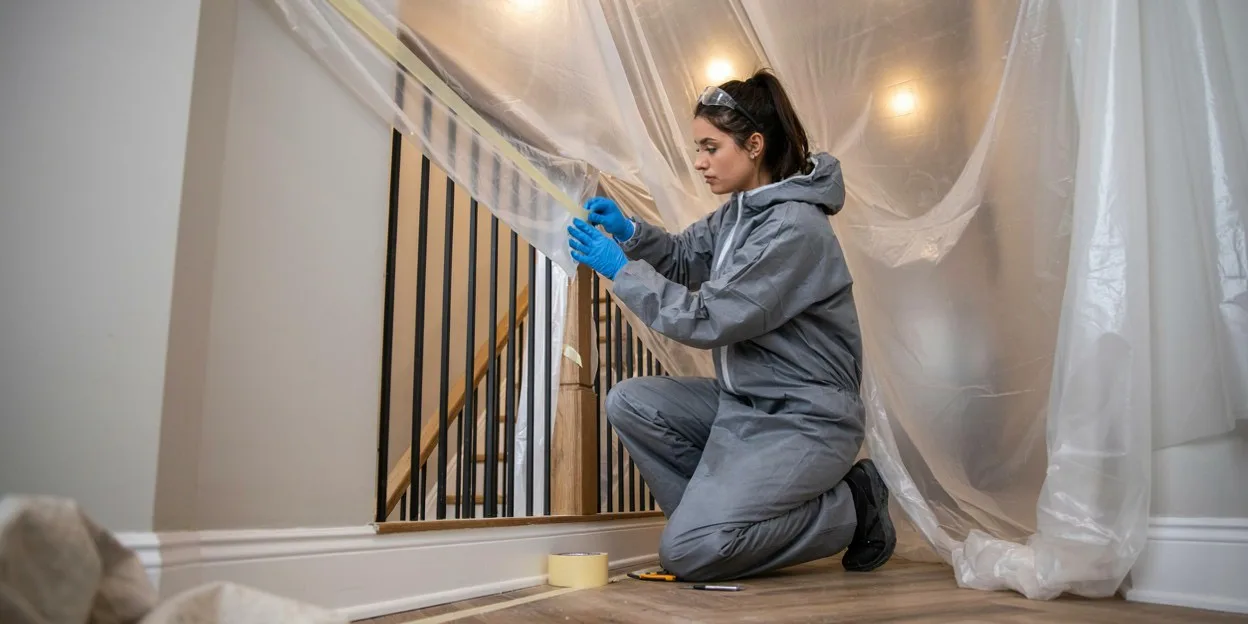
Then they divide the house into zones. Each zone gets its own plastic barriers and its own HEPA scrubber exhausting outside, so demolition in the bedrooms does not load the air in the kitchen. The air handler is shut down and its returns sealed until the equipment itself has been checked.
What to do in the next hour
Open the windows if the air outside is drier than the air inside, which on this coast usually means a winter morning, not a summer afternoon. If the air conditioning still runs, leave it on. Do not run box fans through moldy rooms; they move spores, not moisture.
Photograph every room, every wall, and the water line on the outside of the house. Pull out anything you want to keep that is not wet or growing. Leave the rest for the crew, and do not start tearing out drywall yourself.
What is usually saved and what is removed
Drywall and insulation below the meter line come out on every affected wall. Wet cabinets, carpet, pad, and laminate flooring come out. Upholstered furniture and mattresses with growth on them leave. Block walls, the slab, tile, and metal framing stay and get HEPA vacuumed, cleaned, and dried. Solid wood furniture can often be cleaned.
The crew works zone by zone: demolition, HEPA vacuum, wipe-down, then drying equipment until the block reads dry. The air handler, coil, and ducts get their own pass; see HVAC mold cleaning. If the growth in a closed-up house is mostly on surfaces with no wet walls, the job is lighter and closer to mold removal in several rooms. When everything reads dry, mold damage repair starts the rebuild.
Pasco County notes: surge, seasonal homes, and flood zones
The canal neighborhoods west of US-19, from Hudson Beach and Sea Pines south through Gulf Harbors, took surge water in Idalia on August 30, 2023, and worse in Helene on September 26, 2024. Coastal homes in Pasco had up to five feet of water in Idalia and more in Helene. Many were dried by their owners, painted, and are showing growth now.
Seasonal homes are the other whole-house story. A house locked up from April to November with the air conditioning set high or off sits in humidity that keeps every porous surface damp. Nothing leaked. Everything grew.
In a mapped flood zone, Pasco County may review a rebuild for substantial damage before issuing a permit, and the city does the same inside New Port Richey and Port Richey. Florida licenses mold assessors and remediators separately under Chapter 468, Part XVI, and on a job this size the assessor's protocol, if you have one, is what the remediator works from. Flood insurance and homeowner insurance treat mold differently, so ask each adjuster in writing before work starts.
Calling about whole-home mold remediation
Have the address, the storm or the closed-up period that caused it, and how high the water got if there was water. Say whether anything has already been torn out and whether an assessor has written a protocol. Call (727) 353-1690.